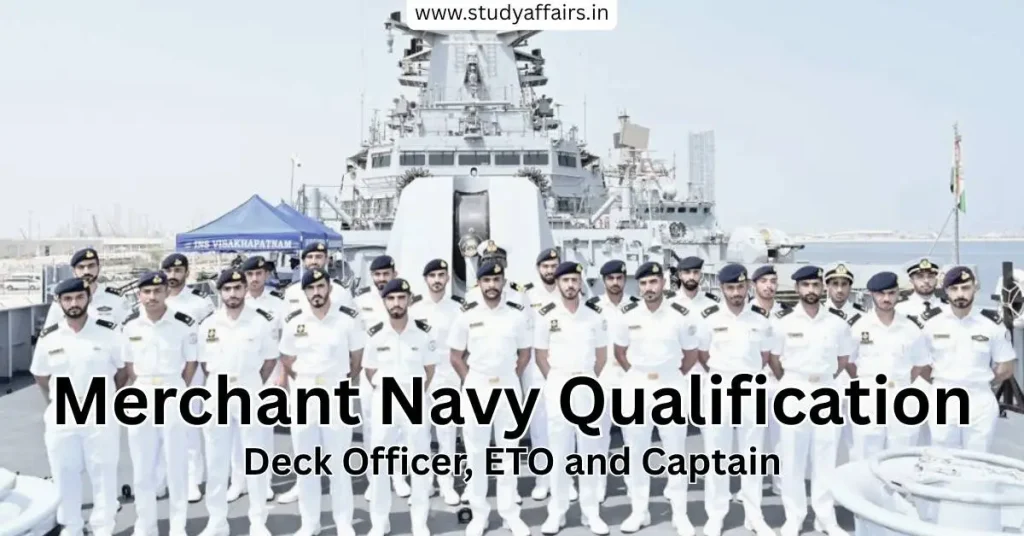
The Merchant Navy is often described as the backbone of global trade. Almost 90% of world trade is carried out by ships, transporting goods such as oil, coal, food, cars, and raw materials across oceans. Unlike the defense navy, which serves a country’s military interest, the merchant navy is a commercial fleet that ensures the smooth functioning of international commerce.
For those with a sense of adventure, love for the sea, and the ambition to earn a high-paying international career, the Merchant Navy offers a promising pathway. However, it isn’t as simple as boarding a ship and starting work. Candidates must meet specific merchant navy qualifications—covering education, age, health, and professional certifications.
This article will serve as your step-by-step guide to understanding every qualification requirement for joining the Merchant Navy, whether you want to start as a deck cadet, an engineer, or eventually become a captain.
Basic Merchant Navy Qualification Requirements
Before looking at specific ranks, it’s important to understand the minimum requirements that apply to most roles.
Minimum Educational Qualification for Merchant Navy
| Entry Level | Minimum Qualification | Subjects Required | Remarks |
| Ratings (entry-level seafarer) | 10th Pass | English & Science | Basic crew and support roles |
| Deck Cadet | 12th Pass with PCM | Physics, Chemistry, Mathematics | 60% minimum in PCM |
| Marine Engineering | B.Tech/BE in Marine/Mechanical Engineering | Engineering background | Required for engine room officers |
| Nautical Science (Officer track) | B.Sc. in Nautical Science / Diploma in Nautical Science | PCM background | Leads to navigation officer roles |
In short, 10th pass can join, but to become an officer you must have at least 12th PCM or a graduate degree.
Merchant Navy Qualification and Age Limit
- Minimum Age: 17 years
- Maximum Age: 25 years for cadet-level entry (extendable in some cases to 28 years for postgraduates).
- Relaxation: SC/ST candidates may receive age relaxations as per government norms.
Merchant Navy Minimum Qualification for Deck Cadet
- Passed 10+2 (PCM) with at least 60%.
- English proficiency is a must (minimum 50% marks in English).
- Must pass medical fitness test (vision 6/6, no color blindness).
Deck cadet is the most common entry point into a seafaring career, leading to officer ranks.
Merchant Navy Qualification in India
India plays a key role in the world’s maritime workforce, contributing nearly 12% of global seafarers.
Indian Merchant Navy Qualification Standards
The Directorate General of Shipping (DG Shipping), Government of India, sets official eligibility norms:
- For Ratings: 10th pass with at least 40% in Science & English.
- For Cadets: 12th PCM with 60%.
- For Officers: Graduate degree in Nautical Science or Marine Engineering.
These qualifications ensure Indian seafarers maintain international credibility and safety standards.
Qualification for Merchant Navy in India vs. Abroad
- India: Highly regulated, centralized under DG Shipping, stricter entry exams.
- Abroad: Many universities abroad accept 50% PCM for cadet programs but require additional IELTS/TOEFL scores for non-native English speakers.
Medical Qualification for Merchant Navy
Medical fitness is non-negotiable. Every candidate must undergo a medical exam from a DG Shipping-approved doctor.
Key Medical Requirements:
- Vision: 6/6 in both eyes, no color blindness.
- Hearing: Normal hearing ability.
- Physical Fitness: No deformities, normal BMI.
- Health Conditions Not Allowed: Epilepsy, psychiatric disorders, HIV, uncontrolled diabetes, chronic asthma.
Without medical clearance, a candidate cannot join the Merchant Navy, regardless of academic qualifications.
Merchant Navy Officer Qualifications
Becoming an officer requires higher education, experience, and passing international competency exams.
Merchant Navy Captain Qualification
The captain (master mariner) is the highest-ranking officer on a ship.
Pathway to Captain:
- Start as a deck cadet.
- Get promoted to third officer after sea training and exams.
- Progress to second officer and then chief officer.
- After sufficient sea-time and passing the Master’s Certificate of Competency exam, you can become a captain.
Timeframe: Usually 12–15 years from cadet to captain.
Merchant Navy Engineering Officer Qualification
- Requires B.Tech in Marine Engineering (4 years).
- Must complete sea training as a Junior Engineer.
- Progression path: Junior Engineer → 4th Engineer → 3rd Engineer → 2nd Engineer → Chief Engineer.
Navy Merchant Navigation Officer Qualification
- Requires B.Sc. in Nautical Science or Diploma in Nautical Science (DNS).
- Must pass Certificate of Competency (CoC) exams for each officer rank.
Merchant Navy Education Qualification Pathways
There are multiple ways to enter the Merchant Navy based on your academic stage.
Courses After 10th for Merchant Navy
- GP Rating Course (6 months – 1 year).
- NCV Deck Cadet Course.
- Saloon Rating Course (for hospitality roles on ships).
These courses lead to entry-level crew positions.
Courses After 12th for Merchant Navy
- B.Sc. Nautical Science – 3 years.
- Diploma in Nautical Science (DNS) – 1 year (leads to degree after sea-time).
- B.Tech Marine Engineering – 4 years.
Merchant Navy Qualification After Graduation
- Graduate Marine Engineering (GME) – for Mechanical Engineering graduates.
- Electro-Technical Officer (ETO) course – for Electrical/Electronics graduates.
These courses allow graduates from other fields to transition into maritime careers.
What Qualification Required for Merchant Navy Jobs
Different ranks demand different qualifications.
Merchant Navy Job Qualification by Rank
| Rank | Qualification Required | Additional Training |
| Deck Cadet | 12th PCM (60%) | DNS or B.Sc. Nautical Science |
| Marine Engineer | B.Tech Marine/Mechanical | STCW + Sea-time |
| Electro-Technical Officer | B.Tech Electrical/Electronics | ETO Course |
| Ratings | 10th pass | GP Rating Course |
Merchant Navy Deck Cadet Qualification
- 12th PCM with 60%.
- English 50%.
- Must enroll in DNS or Nautical Science course.
Navy Merchant Engine Room Qualification
- Marine Engineering graduates or Diploma holders.
- STCW mandatory courses for safety.
Merchant Navy Training & Certifications
Training is just as important as academic qualifications.
STCW Courses and Mandatory Training
- Personal Survival Techniques (PST)
- Fire Prevention and Fire Fighting (FPFF)
- Elementary First Aid (EFA)
- Personal Safety and Social Responsibility (PSSR)
These are compulsory under the Standards of Training, Certification, and Watchkeeping (STCW) set by the International Maritime Organization (IMO).
Specialized Certifications for Career Growth
- Radar Navigation training.
- Advanced Fire Fighting.
- Proficiency in Survival Craft and Rescue Boats.
- Bridge Team Management.
Career Progression and Qualification Upgrades
How to Upgrade from Deck Cadet to Captain
- Gain required sea-time at each stage.
- Pass CoC exams after every rank.
- Gradually progress through officer positions until eligible for Master’s License.
Officer Promotion Path in Merchant Navy
Deck Side:
Cadet → 3rd Officer → 2nd Officer → Chief Officer → Captain
Engine Side:
Junior Engineer → 4th Engineer → 3rd Engineer → 2nd Engineer → Chief Engineer
Merchant Navy Qualification FAQs
At minimum, 12th PCM with 60% and medical fitness are required for officer entry.
Yes, through GP Rating or Saloon Rating courses, but you’ll enter as crew, not officer.
17–25 years for cadet-level entry.
6/6 eyesight, no color blindness, physically fit, and free of chronic illnesses.
By starting as a deck cadet, gaining sea experience, and clearing CoC exams at each stage.
Yes, it offers high pay, global travel, and quick promotions, but requires physical stamina and long separations from family.
Building a Future in the Merchant Navy
The Merchant Navy qualification system ensures that only the most skilled and disciplined individuals manage ships. From 10th pass entry-level crew jobs to officer-level positions requiring degrees, the path is open to anyone willing to work hard.With the right mix of education, training, medical fitness, and determination, you can carve out a successful and highly rewarding maritime career. Whether you dream of being an engineer, officer, or captain, your journey begins with meeting the right qualifications today.
Click here to read this article in Hindi.


